Most event problems start weeks before the event. A stage that does not fit the act. A permit that was not in the schedule. A build planned for the hottest hours of a July day. None of them is hard to avoid if someone asks the right question early.
This is the checklist we work through for an event in Dubai, phase by phase. Use it for a gala dinner or a public festival: the size changes, the order does not.
1. The brief and the budget
Everything else depends on this page. Before you call a venue or a supplier, write down:
- The goal. What should guests remember, do or feel?
- The date and the time of day. Evening or daytime changes the venue, the lighting and the shows.
- The audience. Who comes, and how many.
- The venue, if you have one. Indoor or outdoor.
- A budget range. A range is enough at this stage. Without one, every proposal is a guess.
These are also the things we ask for when you request a quote. The more of them you send, the more exact the first proposal.
2. The concept
The concept turns the brief into an event: a theme, a guest journey, a running order in outline, and a first idea of the stage and the shows.
- Agree one idea, not three half-ideas.
- Ask for the concept and the cost together. A concept you cannot afford is not a concept.
- Check the date against the Dubai calendar. Outdoor events run from late October to mid-March. The Dubai Shopping Festival, from 4 December 2026 to 17 January 2027, fills the middle of the season with public shows across the city, and December is the tightest month for venues, crews and performers. If your date is in December, book early.
3. The venue and the permits
Dubai has venues at every scale, from hotel ballrooms and beach clubs to arenas and exhibition halls. Choose the venue with the production in mind, not only the guest count.
- Access. Can a truck reach the loading point? Is the door to the stage wide enough?
- Power. Is there enough for sound, lighting and screens, or do you need a generator?
- Ceiling and rigging. Aerial acts and hanging lights need height and approved rigging points.
- Darkness. LED and light shows need a room, or an hour, that can go dark.
- Build time. How many hours do you get before doors open, and how many after it ends?
Permits. Events in Dubai are licensed through the Department of Economy and Tourism (DET), which runs the city's event permit system. Ticketed events need a permit before tickets go on sale. Which permits your event needs depends on what it is and where it is held. Put them in the schedule from the start, not at the end.
4. Production and suppliers
This is where the plan becomes drawings, lists and a schedule.
- The technical design. Stage, set and flooring; sound, lighting, LED screens and video; special effects, furniture and branding.
- One schedule. Every supplier works to the same timeline: deliveries, build, rehearsals, doors, show, load-out.
- One point of contact. When the stage, the sound and the shows sit with different companies, the gaps between them become your problem. Decide who owns the whole picture.
- Guest logistics. Transport and accommodation, if guests travel.
5. Entertainment and the running order
Book the shows against the event, not the other way round.
- Match the act to the moment. An opening, a dinner, a finale and a family afternoon each need something different.
- Match the act to the room. Height for aerial acts, darkness for LED shows, space for a parade route.
- Ask for the technical rider. It lists what the stage, sound and backstage must provide for each act. Build the production to it.
- Write the running order to the minute. Speeches, shows, food service, the MC's links, and the changeovers between them.
- Leave time for sound checks and rehearsals in the schedule. They are the first thing to be squeezed and the last thing you want to lose.
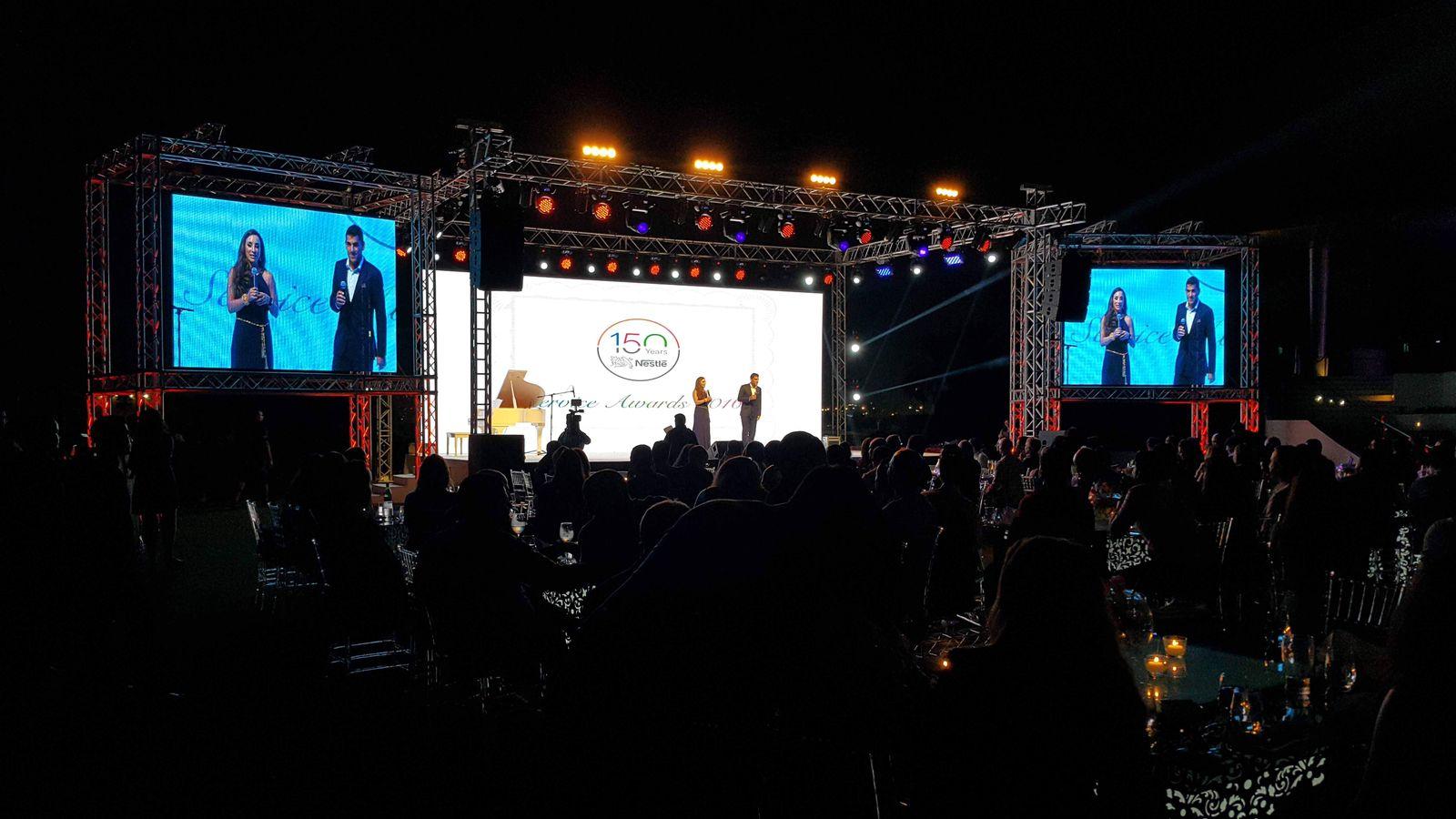
6. The build and the technical checks
The build is the part guests never see, and the part that decides whether the evening works.
- Plan the build around the heat. From 15 June to 15 September the UAE bans outdoor work in direct sun between 12:30 and 15:00. An outdoor build in summer takes more days than the same build in winter. Summer events move indoors or after dark.
- Run the technical checks before guests arrive: power, sound, lighting, screens, effects, and every cue in the running order.
- Walk the site as a guest would: from arrival and entry to the seats, the bars, the toilets and the exits.
- Have a plan B for outdoor events: wind, sand and the rare rain shower.
7. Event day
- One person runs the show, with the running order and a radio, from first access to load-out.
- Brief every team before doors open: staff, security, suppliers and performers.
- Keep one point of contact for the client, so decisions on the night are made once.
- Watch the flow. Queues at entry, crowding at the bar or the stage: the earlier they are seen, the easier they are fixed.
8. After the event
- Load-out is part of the event. Agree the hours with the venue and plan it like the build.
- Collect the photos and videos while everyone is still in touch.
- Write down what worked and what did not within a week. It is the best brief you will ever have for next year.
Where we have used it
We have worked through this list on events of every size in Dubai: the Festival Garden at Expo 2020 Dubai, which we delivered from the production to the daily operation of the site; the outdoor fan operations of the Dubai Duty Free Tennis Championships 2024; and activations across the streets and malls of the city for Dubai Summer Surprises.
Planning an event in Dubai?
We plan, produce and run events from the first idea to the last truck leaving the site. See how we work on our event management page, our production services on staging and AV, the shows on our entertainment pages, and the city on our Dubai page.
Send us the date, the kind of event and a budget range, and we will come back with ideas and a quote: contact us.